Author: admin

  • What Is IDV in two-four wheeler Insurance & Why It Matters?

    What Is IDV in two-four wheeler Insurance & Why It Matters?

    IDV in Two Wheeler and Four Wheeler Insurance

    Everyone of us own at least one two-wheeler and most of us also own a four-wheeler. Whether it is a scooter, bike, car, or SUV, all vehicles must have active insurance coverage when being used. In earlier days, we often considered insurance as a legal formality. However, with rising vehicle and repair costs, insurance now plays a crucial role in ensuring financial compensation during accidents or theft.

    Contrary to common assumptions, vehicle insurance does not guarantee reimbursement of the full vehicle price. It only covers up to the IDV or Insured Declared Value, which is the maximum amount an insurer agrees to pay, evaluated by their surveyor.

    Understanding IDV

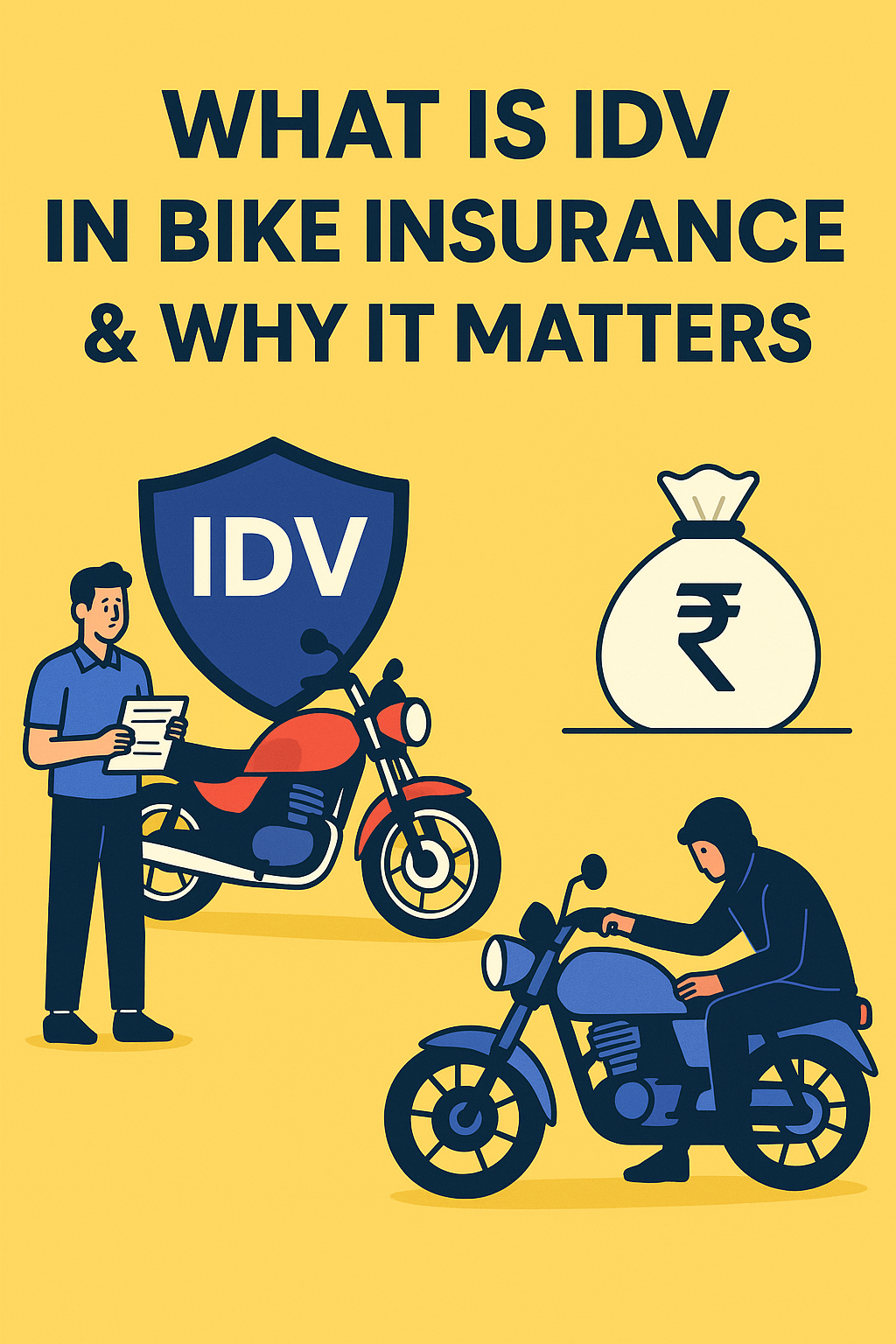
    IDV stands for Insured Declared Value and refers to the current market value of your vehicle minus depreciation. It is the maximum sum assured by the insurer that you will receive in case your vehicle is stolen or completely damaged beyond repair. Also acts as the maximum sum insured in case of total loss or theft. Your insurer calculates IDV annually based on vehicle age and depreciation guidelines.

    Real-Life Scenario: Bike Theft

    Consider this scenario. Aakash bought a bike for ₹1.3 lakhs and insured it with an IDV of ₹1.12 lakhs. A few months later, the bike was stolen. He filed an FIR and informed his insurer. After investigation, the insurer agreed to settle the claim, but the payout was slightly lower than ₹1.12 lakhs due to depreciation adjustments — this is standard practice.

    Real-Life Scenario: Car Accident

    Now, assume a car worth ₹25 lakhs has an IDV of ₹19.25 lakhs. If the car meets with an accident, the insurer will assess the damage using a surveyor. If the damage is repairable, the insurer pays the approved amount. If the vehicle is beyond repair, they might reimburse the IDV.

    How IDV Is Calculated

    IDV is generally calculated using this formula:
    IDV = Manufacturer’s Listed Selling Price – Depreciation
    *The depreciation depends on the age of the vehicle. For example:

    • Up to 6 months – 5% depreciation
    • 6 months to 1 year – 15%
    • 1 to 2 years – 20%
    • 2 to 3 years – 30%
    • 3 to 4 years – 40%
    • Above 5 years – Based on mutual agreement

    *The above is for illustration purposes only and the actual decpreiation numbers may vary
    IDV for Two wheeler insurance
    IDV For Bikes

    Why IDV Matters

    • Claims Are Limited to IDV: No matter how much you paid for the vehicle, your claim cannot exceed the IDV.
    • Affects Premium: Higher IDV means a higher premium, but also better coverage.
    • Important in Total Loss Cases: Knowing your IDV helps manage expectations during theft or total damage.

    Tips to Handle IDV Smartly

    • Don’t opt for very low IDV to reduce premiums. It can backfire during claims.
    • Ask your insurer how they calculate depreciation annually.
    • During renewals, compare IDV offered by different insurers.
    • If you plan to sell your vehicle, a higher IDV makes it more valuable to a buyer.
    • Ask your agent or POSP to explain how your IDV was arrived at.

    In conclusion, IDV is not just a number—it’s the maximum lifeline your insurer provides when the worst happens. Choose it wisely and stay informed!

  • Gig Professional’s Life & Insurance

    A Gig worker (aka Freelancer) is the buzzword in the current times. He or She might have donned many avatars such as creative/web designer, developer, tester, scrum master, sales person, project manager and a lot of such roles..

    Life of such a Gig Professional is an exciting one. He might have taken some Full Time role at some place for a while, changed to a consulting role in a different company, taken a remote position after and so on. The rewards of being a gig worker are also handsome. No dependency on a single company, ability to plan our time which means our life as well. The financial perks are also determined by our skill and ability to negotiate which is not the case for an employee.

    There are downsides too. Some times they may be pressurized to deliver with unreasonable deadlines, may be gently forced to work long hours than billed and so on. One of the heart burn would be holidays. When employees would have their vacation and holidays with full pay, freelancers won’t have this privilege.

    The Privilege Gap:

    The biggest gap would fall in terms of the future and health management. While employees would be insured (though may not be perfect) for a lot of eventualities like Life, Health a gig worker may not have that cushion. While Life Insurance Policy would cover in the event of any untimely death of the family’s primary bread winner, a health or Mediclaim insurance would cover all the expenses of a medical scenario and treatments like Accidental treatment, Cancer (Chemo, Radiation therapy), Heart Attack, Cardio Vascular diseases, Eye problems and a host of health related problems.

    Regular medications

    Most of the average citizen’s lives run on subscription. We pay a constant amount money to manage our life style diseases such as Hypertension, Type 2 diabetes, Fatty Liver, Respiratory diseases etc., These conditions slowly and steadily pull our financial resources down. While taking an insurance for a new policy, if these conditions are identified (PED – Pre existing diseases) the policy amount would be set higher with different names. After the expiry of the fixed term, these will also get covered.

    Risk Protection

    Having seen the above, though a Gig worker makes more money than a normal employee a sudden health or life event would drain considerable financial resources from him/her. That puts his future and current financial status at a major risk.
    While such an eventuality is being covered for an employee by his employer company by getting them a Life Insurance and Mediclaim insurance policies, a Gig worker is on his own to cover himself.

    Invest in Health

    The most probable solution for a Gig worker is while he/she upskills constantly, works hard to make a lot of money they should also invest in their health and risk cover. He or She must spend enough hours in a day to improve his health by involving in good amount of physical activity, getting good sun exposure by engaging in some kind of field work. Though a regular jog, walk or gym activity is good, engaging in real meaningful physical activity gives multitude of benefits. This takes care of prevention while they must also invest a small portion of their earnings towards Pension earning Life insurance policies with Life Cover and a compulsory Mediclaim insurance to cover for any eventualities in our physical well being.

  • Hello world!

    Welcome to WordPress. This is your first post. Edit or delete it, then start writing!